
Our environmental impact
Denmark Farm is somewhat badly named.
it’s not in Denmark and it isn’t a farm.
At least, it isn’t now…

We started from nothing
Before we took charge it was a working farm with lush, chemically-enhanced green fields with a few hedges and even fewer trees. There was very little native wildlife, and there were certainly no decent habitats for wildlife to live in.
Farming and wildlife were seen as incompatible.
It was one or the other.
We wanted to prove that nature and farming could co-exist happily.


The transformation back to woodland and meadows took time and a lot of hard work
Maintaining it still does, largely because no bramble has ever thought “Enough is enough, I think I’ll stop growing now!”
Our volunteers do so much valuable work, as do participants on the coppicing courses, the gardening courses and the hedge-laying courses.
And there’s an environmental impact right there, a hugely positive one.
People interacting with the environment, so that it can flourish and go about its business.
We started to see wildlife moving back in.
Four decades later and the list of wildlife species is huge, and growing.
Not only has the environmental impact on flora and fauna has been enormous,
it’s also been really positive.
Come and walk around now and see what we mean…
Trees where there used to be bare fields.
Small mammals where there used to be just sheep.
Cute highland cattle where once were cattle (OK, so not everything has changed).
We now have a really varied selection of habitats including woodland, hedgerows, scrub, wildflower meadows, grasslands, marshes, a lake, a pond and various scrapes (shallow ponds that dry up in summer).

In 1985 only 15 species of bird nested on the farm, but now an average of 46 species breed here, totalling over 200 pairs on just 40 acres.

Fields once dominated by rye grass now contain over 100 species of wild flowers, grasses and sedges, all from seed carried in by the wind, small mammals or birds.

Credit – Wendy James
The lake and ponds now support 14 species of breeding dragonfly and damselfly – an impressive diversity for west Wales.
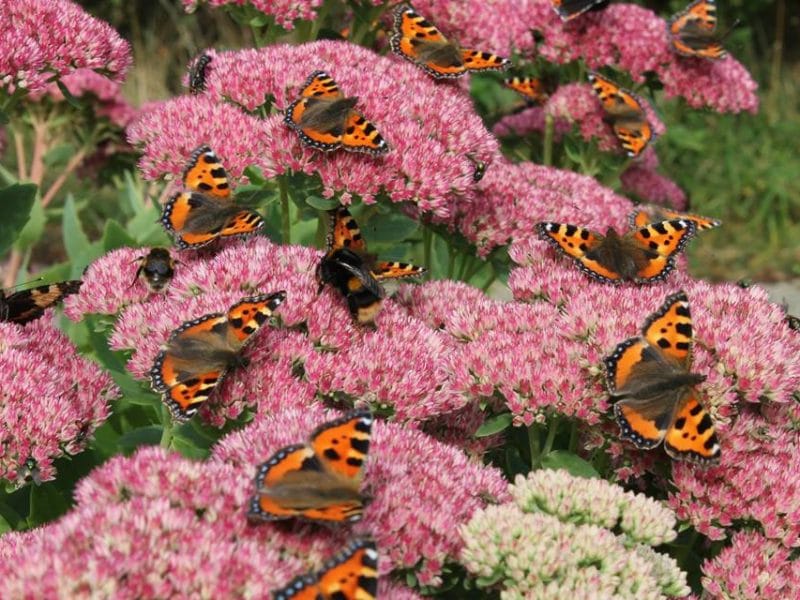
Large populations of small mammals, butterflies and ground invertebrates have returned to the meadows and pastures.

There is another, less visible environmental impact
More and more, people are coming here to reconnect with nature.
To have some time to themselves, and whenever possible, find some peace from the hectic world outside.
There is an innate need in everyone to step out of the world and away from it’s troubles for a while,
and there is little more restorative than stroll in nature:
The birdsong in spring.
The smell of the flowers in summer
The vivid colours of the trees in autumn.
The grounding feeling of the earth beneath your feet in winter.
Without a doubt, these are the environmental impacts that the planet Earth needs.
Impacts that strengthen nature while helping people feel connected, in a natural sense, and happy.


