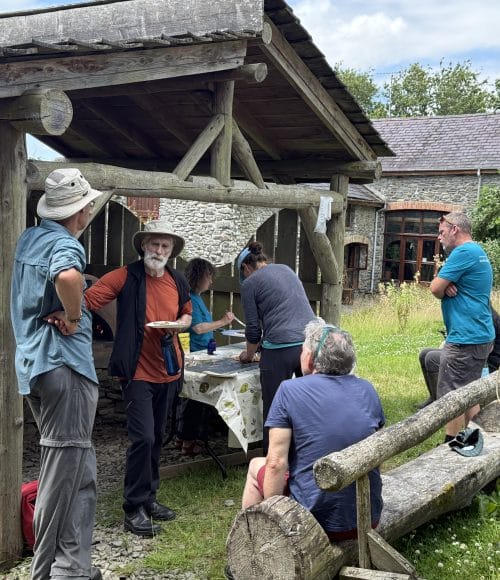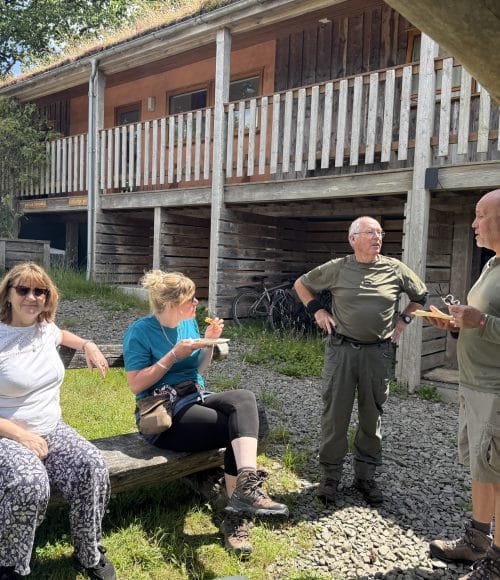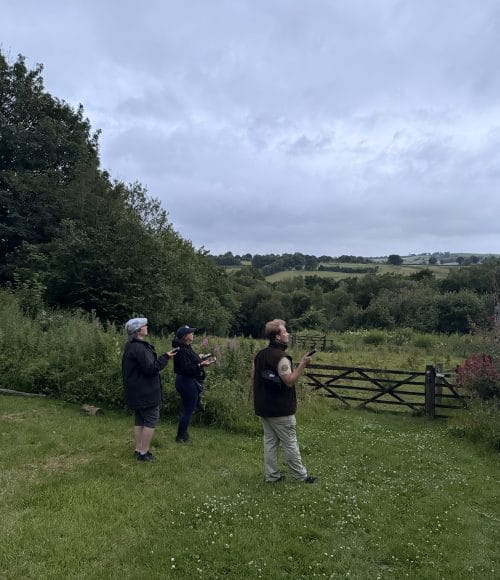
In June we held another successful BioBlitz here at Denmark Farm. With the help of a range of local experts, supported by a host of volunteers and members of the public to track and record a whole range of organisms across the wealth of habitats here on site.
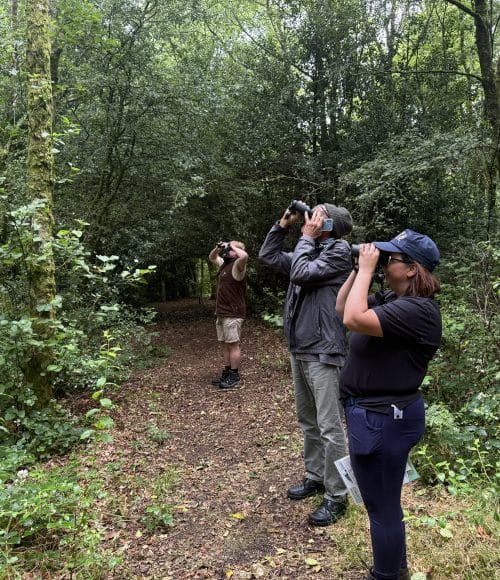
The day started early doors with Carys May from WWBIC (West Wales Biodiversity Information Centre) where we headed out to listen to the dawn chorus. With the use of the excellent ‘Merlin’ app we walked across the site noting the bird species present from their calls and songs. It’ s quite the agreeable way to start the day with the low light and early mists, just listening to the sounds of nature around us. Amongst the, at times, cacophony of calls, from favourites such as our Chiffchaffs and Blue Tits, we did hear a Grasshopper Warbler (Locustella naevia) – a relatively scarce bird and one that was new to some of us at Denmark Farm.
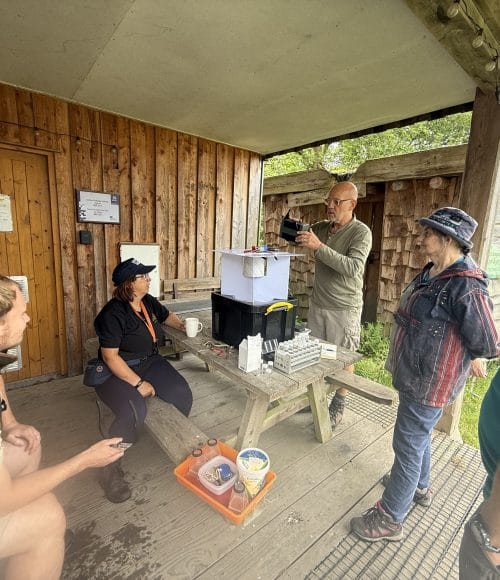
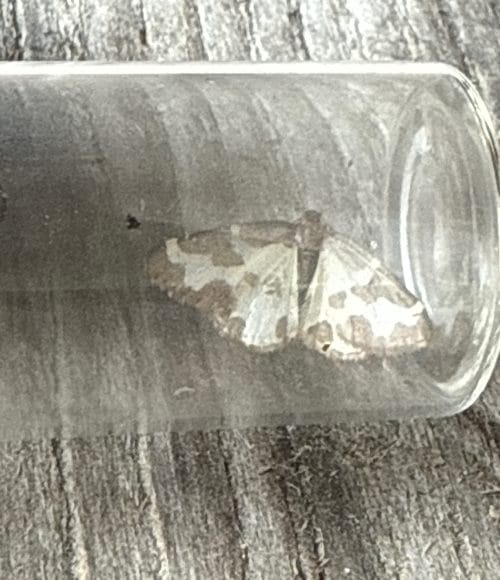
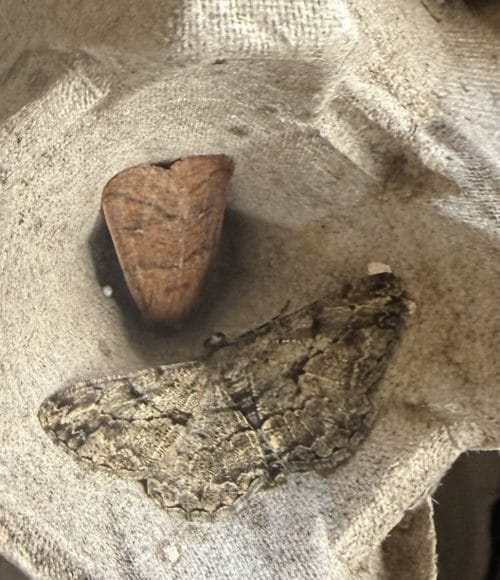
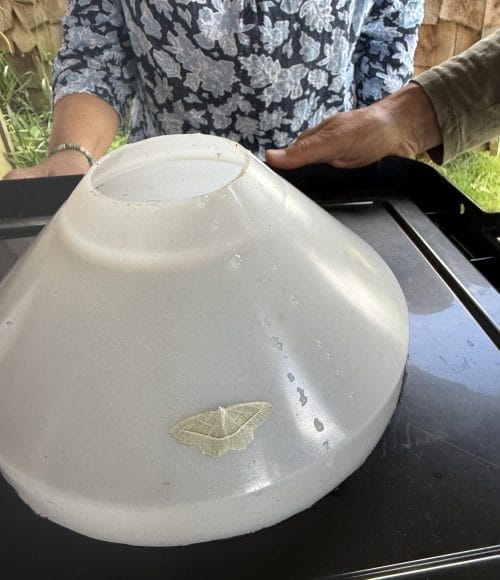
Our next foray into the wonderful world of wildlife came at the hands Shane Jones from Ceredigion Birds and Wildlife, who took us to view the fascinating lives of micro and macro moths. Shane had set up his trap overnight and we carefully went through the residents one by one to observe, record and then release. If you’ve never looked closely at our moth species, of which there are nearly 2,500 in the UK, then you may have missed out on the subtle beauty and variations that they possess. A Scarlet Tiger Moth (Callimorpha dominula) was one of significance that was found. Each one had intricate patterns and colours and came is such a range of shapes and sizes that it was truly inspiring to take a brief look into their lives.
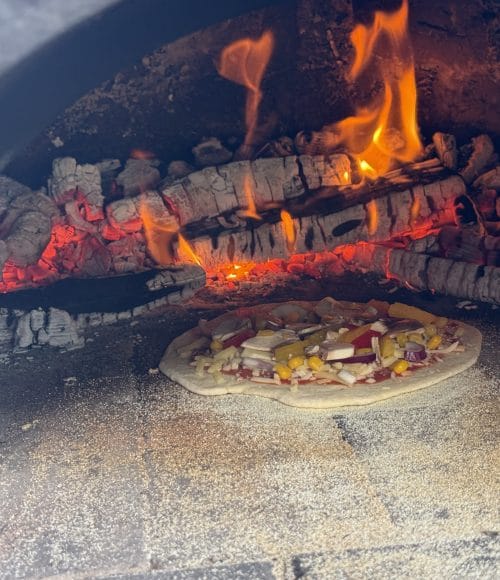
After a delicious pizza lunch cooked on our own cob oven, people had a chance to head down to the lake to do some pond dipping with me, to see what was alive in the murky depths, whilst others went off with Paul Turner to walk some of our fields to survey butterflies. Down at the lake the dipping revealed the usual aquatic life from water shrimp to caddis fly larvae and even a large leech but it was over the water where a dazzling display was being played out. In an ongoing dogfight the air was filled with damselflies and dragonflies as they set out to display, mate and lay their eggs. Many different species were spotted, hard as that was with the speed at which they flew, including the Green-Eyed Hawker Dragonfly (Isoaeschna isoceles) – a scarce dragonfly here in Wales.
Back with the butterflies, the start of what was to be a pretty hot summer combined with our fields being filled with wildflowers created the perfect opportunity to see a good range of examples. Whilst there were no spottings of rarer examples, there was plenty to see across the site with Skippers in abundance and the flashing winged semaphore of the Painted Lady (Vanessa cardui) and Red Admiral (Vanessa atalanta).
Di Clark from Koru Ecology Associates came to help us with her expertise and to train us how to track dormice. She had previously set up 20 tracking tunnels around the site to see if we can find evidence of dormice from their footprints, left on card after walking over (harmless) wet charcoal dust paint. Di showed us how to check the tunnels and replace materials whilst looking for their distinctive ‘pizza slice’ shaped footprints. Whilst not finding any evidence yet we are still checking weekly and will be carrying out a nut hunt to see if we can finally find evidence of the elusive rodent.
Martin Thomas, known far and wide for his expertise with a range of wildlife, but here more specifically with small mammals, came to help us look at an area on site that evidence had been found of nesting harvest mice. We were able to get his advice and pick his brain about how best to go forward with further surveys and best forms of management.
The afternoon was filled with a survey of trees on site, of which we found plenty of examples of Wild Service Tree (Sorbus torminalis) – a locally uncommon species; a survey with Steve who took guest through the woodland to look for terrestrial invertebrates, sometimes known informally as ‘mini beasts’, and a survey of the plants found in our hay meadow of which we found over 25 different species of grass and flowering plant as well as a wide range of invertebrates making the most of this important habitat.
The day ended as dusk fell and people came back to site to take part in the bat survey with Carys. Utilising bat detectors to step the frequency of bat squeaks down to a noise audible to humans we first saw and heard the Noctule (Nyctalus noctula) bat flying overhead from it’s roost in our office building wall. This was followed by the Soprano Pipistrelle (Pipistrellus pygmaeus) and Common Pipistrelle (Pipistrellus pipistrellus) bats, whizzing and whirling overhead in the courtyard and over the fields as we walked down to the lake. Much delight was had hearing the ‘raspberry noises’ made by bats as they catch a bug! At the lake we then saw and heard the Daubenton’s bat (Myotis daubentonii) which is usually found over water, fishes insects from the water’s surface with their large feet or tail.
The day was a huge overall success and all the records from the day have been added into the WWBIC ‘LERC Wales‘ app to ensure the county records are updated and to help us record and create a better picture about the wildlife here, how it changes over time and what we might expect to see one year to the next.
We would like to extend a huge THANK YOU to everyone who volunteered their time to observe, identify and record the species on site. We simply couldn’t do this event without you, and we are so grateful for your support.
It’s so important for us all to be a part of this tracking of our local biodiversity to help us to understand how we can manage our land and environment better to support a wider range of species. We all need to remember though that it’s not all about the individuals here, it’s about making healthy habitats for all. As everything is interlinked, everything we do has an impact and knock-on effect. So, get outside, look at all the nature around you and start to record it, you’ll find it addictive.
At the very least come back to Denmark Farm next year for BioBlitz ’27 where we hope to survey even more.
Chris & the Denmark Farm Team